
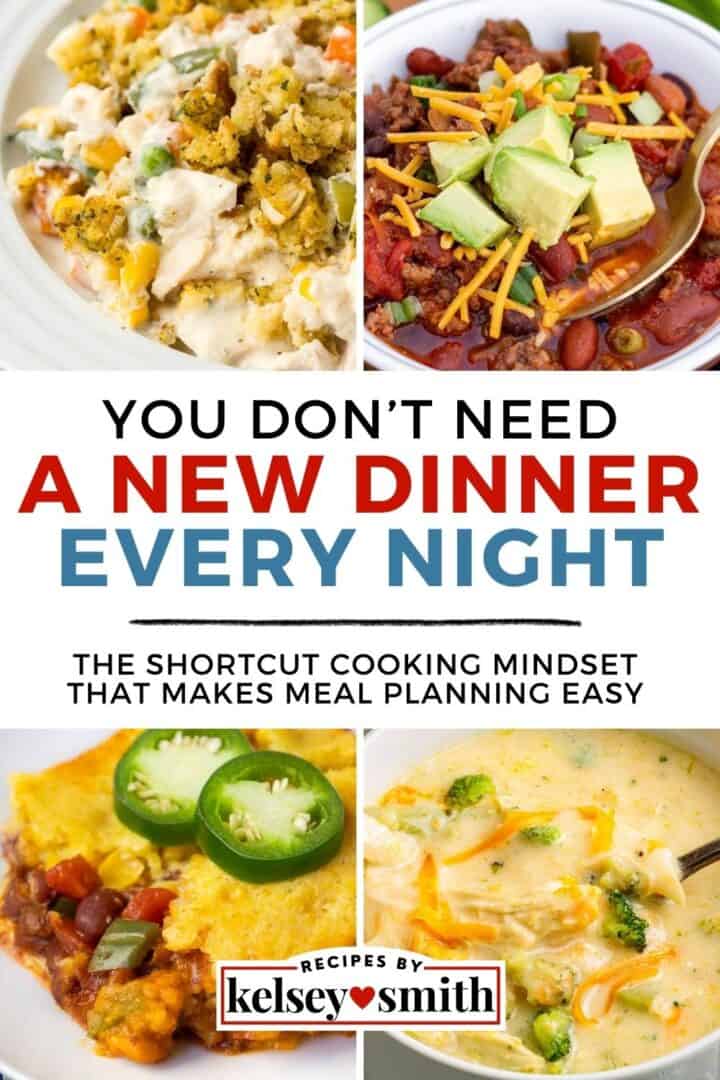
If meal planning feels overwhelming, it’s probably not because you’re bad at cooking or lack ideas. It’s because somewhere along the way, we started believing that dinner needs to be new, different, and inspired every single night of the week.


Different cuisines. Different flavors. Different vibes. Like we’re supposed to eat our way around the globe between Monday and Friday. That expectation is exhausting, and it’s a big reason meal planning feels harder than it needs to be.
The Problem With Too Much Variety
Have you ever gotten caught in the perpetual cycle of trying to come up with new/different/exciting meal ideas for every night of the week? One night Italian sausage rigatoni. One night Southwest chicken bowls. One night old-fashioned meatloaf.
By Wednesday, decision fatigue sets in. By Thursday, the plan falls apart.
This is where shortcut cooking comes in.
Shortcut Cooking Is About Building Blocks
Shortcut cooking doesn’t mean cutting corners for the sake of it.
It means starting with a solid base that can carry you through more than one meal.
Instead of asking:
“What brand-new recipe am I making tonight?”
You ask:
“How can I reuse what I already made?” or "How can I make different meals with shared ingredients?"
This mindset shift alone makes weeknight dinners dramatically easier. It’s also why having a semi-homemade pantry matters. When you stock versatile ingredients, you naturally stop reinventing the wheel every night.
A Real-Life Example: Chili Isn’t a One-Night Meal
There is a happy medium between eating something different every night and eating the same thing every night. Let’s talk about chili because it perfectly illustrates how shortcut cooking works in real life.
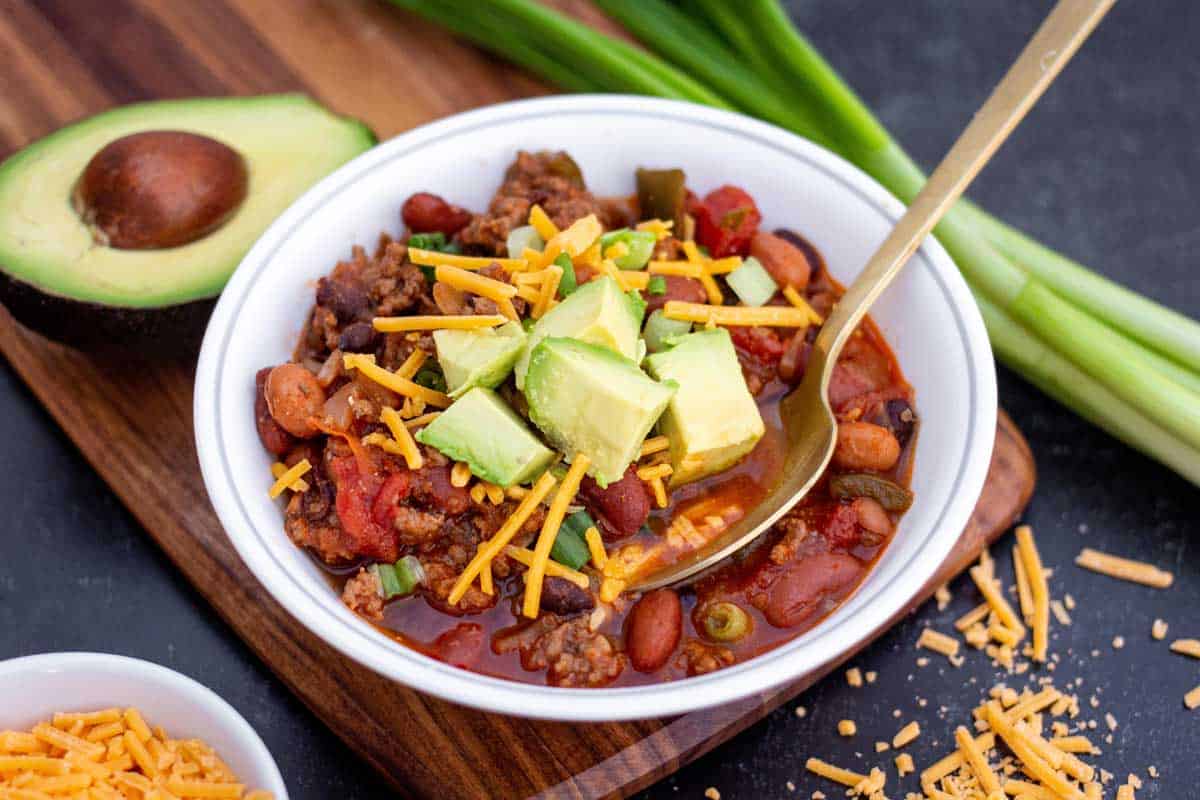
Making chili takes time. Chopping, browning, simmering. That’s a lot of effort for one meal.
You can absolutely eat a bowl of chili Monday through Friday if you'd like, but here are a few ideas of how to turn one pot of chili into multiple easy dinners with a little more variety:
- Night 1: A bowl of classic chili
- Night 2: Chili dogs or chili cheese fries
- Night 3: Chili over baked potatoes
- Night 4: Chili cornbread casserole (made with Jiffy mix, of course)
- Night 5: Chili mac (made with Velveeta shells)
Different formats with very little extra work. That’s not boring. That’s efficient.
Ingredient Prep vs. Meal Prep (Why This Matters)
This is where I tend to part ways with traditional meal prep. I love simplicity, but I don’t love eating the exact same meal five nights in a row. That’s where ingredient prep can be handy.
Instead of prepping full meals ahead of time, I buy or prep ingredients that can be used in multiple ways throughout the week. It’s flexible, realistic, and much easier to stick with long term.
One of my favorite examples? Rotisserie chicken. At the beginning of the week, I’ll grab one (sometimes two) rotisserie chickens from the store. Many of my recipes, like my chicken broccoli cheddar soup, call for “cooked chicken” as an ingredient, and this is exactly what I mean. Rotisserie chicken works perfectly in casseroles, soups, pasta dishes, rice bowls, skillet meals, you name it.
And if I don’t have rotisserie chicken? Frozen chicken works too. I can’t tell you how many times I’ve used frozen chicken nuggets in my chicken stuffing casserole. It works, it saves time, and it still gets dinner on the table.

Ingredient prep fits perfectly into the shortcut cooking mindset because you’re doing the work once, you’re not locked into one specific meal, and you can pivot based on mood, energy, or what’s left in the fridge.
Why This Approach Actually Makes Dinner Feel Easier
When you embrace repeat ingredients, you shop more efficiently, waste less food, spend less time planning, and make fewer last-minute decisions. Most importantly, dinner stops feeling like a nightly creative assignment.
This is the heart of shortcut cooking. If this resonates, you’ll probably also love rotating shortcut dinners that rely on pantry staples, rotisserie chicken, frozen vegetables, and simple sauces.
You Don’t Need a New Dinner, You Need a System
Meal planning doesn’t have to mean seven completely different dinners, perfect balance every night, and constant inspiration. What you actually need is a repeatable system:
- A few base recipes
- Flexible leftovers
- Ingredients that pull double (or triple) duty
Shortcut cooking allows you to stop overthinking dinner and start building meals that actually fit real life. You don’t need a new dinner every day, you just need a good starting point.



Comments
No Comments